

 Add a button link here



Listen to this article:
This article was updated on January 21, 2026, with frequently asked questions regarding pay reporting, employee rights, implementation, pay assessment, data and privacy.
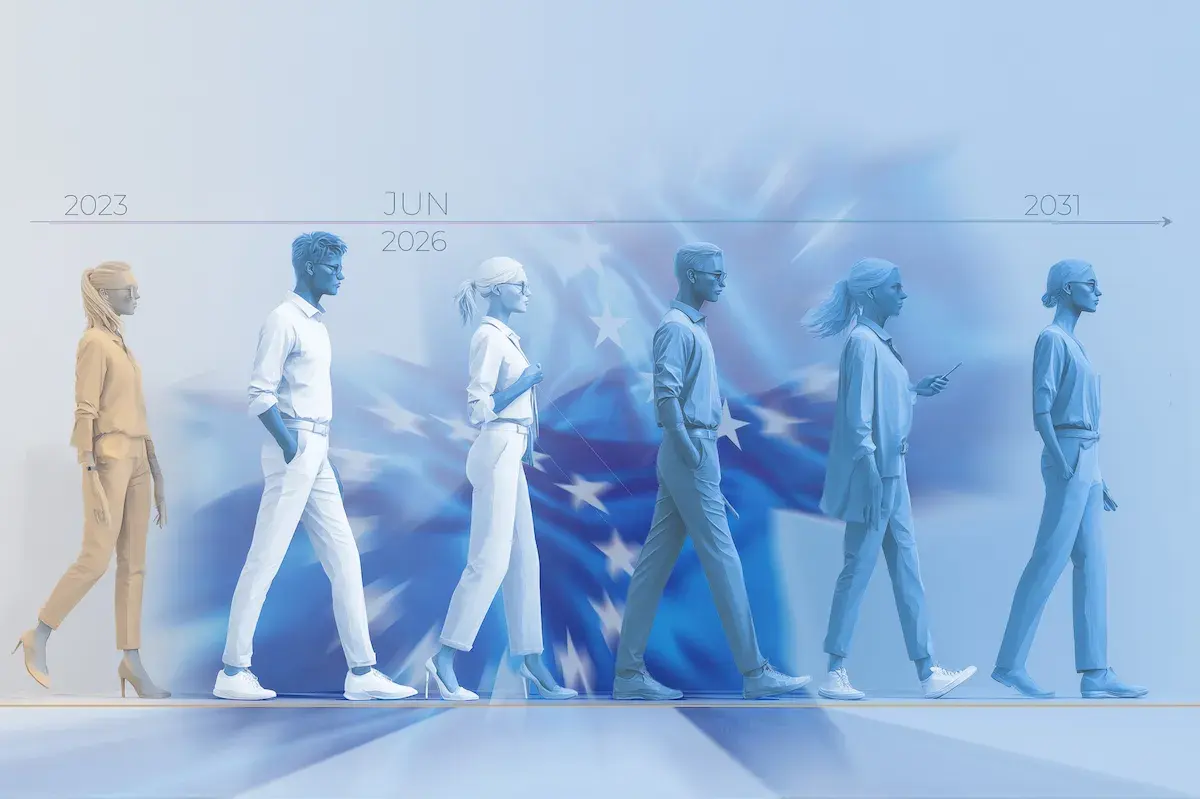
The European Union has taken a significant step toward closing the gender pay gap with the Pay Transparency Directive (EU) 2023/970. Adopted in April 2023 and published on 17 May 2023, this landmark legislation requires all EU member states to implement binding measures by June 2026 to ensure equal pay for equal work or work of equal value between men and women.
With the gender pay gap across the EU standing at approximately 13%, this directive aims to address systemic gender inequalities through enhanced transparency, stronger enforcement mechanisms, and clear reporting obligations.
What is the EU pay transparency directive?
The Pay Transparency Directive strengthens the application of the principle of equal pay for equal work or work of equal value between men and women. It establishes minimum requirements across all EU member states, focusing on:
- Pay transparency measures before and during employment;
- Mandatory reporting obligations for larger employers;
- Enforcement mechanisms to protect workers' rights;
- Remedies and penalties for non-compliance.
Key timeline
- 17 May 2023: Directive published in the Official Journal, and it becomes binding after national transposition;
- 7 June 2026: Member states must transpose into national law;
- 7 June 2027: First reporting deadline for companies with 250+ employees.
For a deeper breakdown of what each of these milestones means in practice, including a month-by-month action plan, see our pay transparency directive timeline and compliance checklist.
For a complete breakdown of all deadlines by company size, see our EU Pay Transparency Directive timeline and compliance checklist.
Main points of the EU directive
1. Pay transparency before employment
✅ What employers must do:
- Provide information about the initial pay or its range for advertised positions;
- Share relevant collective agreement provisions;
- Ensure job vacancy notices and titles are gender-neutral;
- Conduct recruitment processes in a non-discriminatory manner.
❌ What employers can’t do:
- Ask candidates about their current or previous salary history;
- Include discriminatory language in job postings.
2. Transparency during employment
The right to information on pay: Employees can request and must receive:
- Their individual pay level;
- Average pay levels (aggregated, not individual salaries) broken down by sex for workers performing the same work or work of equal value.
Pay structure requirements: Employers must:
- Make pay criteria easily accessible to workers;
- Explain how pay levels and pay progression are determined;
- Use objective, gender-neutral criteria;
- Provide the information requested by the employee in a timely manner;
- Not prevent employees from disclosing their own remuneration;
- Inform workers of their rights to pay transparency (communication frequency may vary depending on national implementation).
3. Pay gap reporting obligations
Companies must report specific gender pay gap data based on their size:
Required data includes:
- Gender pay gap (average and median);
- Gender pay gap in complementary/variable components;
- Proportion of female and male workers receiving bonuses;
- Proportion of female and male workers in each pay quartile;
- Gender pay gap by category of workers.
4. Joint pay assessment
If a company's pay reporting shows a gender pay gap of 5% or more in any worker category that cannot be justified by objective, gender-neutral criteria, employers must conduct a joint pay assessment with workers' representatives.
This assessment must:
- Identify and analyze pay differences;
- Determine the reasons for gaps;
- Develop measures to address unjustified differences;
- Evaluate the effectiveness of previous measures.
Benefits of the directive
For employees
- Greater transparency into pay structures and criteria;
- Protected rights to request pay information without retaliation;
- Enhanced legal protections with shifted burden of proof to employers;
- Reduced gender-based discrimination through objective pay criteria;
- Career clarity with visible progression opportunities.
For employers
- Proactive compliance by identifying issues early;
- Improved talent attraction through transparent practices;
- Enhanced reputation as a fair and equitable employer;
- Reduced legal risks with clear documentation;
- Better workforce engagement through trust and transparency.
For society
- Closes the gender pay gap across the EU;
- Promotes equality in the workplace;
- Includes a reference to intersectional discrimination, encouraging member states to consider overlapping forms of disadvantage;
- Sets global standards for pay transparency;
- Economic benefits through reduced poverty and pension gaps.
How to prepare for the EU Pay Transparency directive
Step 1: Conduct a pay equity audit (now - 6 months)
Start by analyzing your current state:
- Review existing pay structures across all roles and levels;
- Identify gender pay for comparable roles or work of equal value;
- Assess whether the criteria are objective and gender-neutral;
- Analyze job evaluation and classification systems;
- Analyze career progression frameworks: are they gender-neutral and based on objective criteria?
Action items:
- Gather comprehensive compensation data;
- Use analytical job evaluation methodologies;
- Identify categories where gaps exceed 5%;
- Document findings and root causes.
Step 2: Review and update job architecture (months 3-9)
Establish a robust foundation:
- Implement gender-neutral job evaluation and classification systems;
- Use objective criteria: skills, effort, responsibility, working conditions;
- Ensure roles are accurately reflected and consistently applied;
- Remove any direct or indirect gender bias.
Action items:
- Adopt recognized analytical methodologies;
- Train managers on gender stereotypes;
- Document classification systems clearly;
- Test systems for potential bias.
Step 3: Update policies and processes (months 6-12)
Align your practices with directive requirements:
- Revise recruitment policies to ensure gender-neutral language;
- Update interview guidelines to prohibit salary history questions;
- Create transparent pay progression criteria;
- Establish clear communication channels for pay information requests.
Action items:
- Draft new policy language;
- Update recruitment templates;
- Create standardized pay range disclosures;
- Train hiring managers on new requirements;
- Increasing women's access to mentors and sponsors;
- Eliminating biases regarding flexible vs. fixed schedules;
- Educating and supporting women in self-promotion and increasing self-confidence, overcoming burnout, and cultivating resilience;
- Creating supportive communities for women.
Note: These last points (mentorship, burnout support, self-confidence) are recommended practices, not obligations under the directive.
Step 4: Prepare reporting systems (months 9-15)
Build infrastructure for compliance:
- Determine which reporting category your company falls into;
- Set up data collection processes for required metrics;
- Establish internal review mechanisms;
- Create templates for joint pay assessments (if needed).
Action items:
- Implement EU pay transparency compliance software capable of required reporting;
- Designate responsible personnel;
- Create reporting schedules and reminders;
- Test data accuracy.
Step 5: Train and communicate (months 12-18)
Prepare your organization:
- Train HR, management, and employees on new rights and obligations;
- Develop communication materials explaining changes;
- Establish protocols for responding to information requests;
- Build awareness of unconscious bias.
Action items:
- Create training modules for different audiences;
- Develop FAQs for employees and managers;
- Schedule training sessions before deadlines;
- Set up ongoing education programs.
Step 6: Monitor and refine (ongoing)
Maintain compliance and continuous improvement:
- Regularly review pay decisions for compliance;
- Monitor gender pay gap trends;
- Update job evaluations as roles evolve;
- Stay informed about national implementation laws.
How to communicate with employees
According to the Pay Transparency Directive (EU) 2023/970, employers must “inform all workers, on an annual basis, in an appropriate manner, of their right to receive information on their individual pay level and the average pay levels, broken down by sex, for categories of workers performing the same work as them or work of equal value to theirs.”
As a result, employers will need to develop an internal communication plan and clear policies for resolving complaints of pay discrimination. Here's how to approach it:
Key messages to convey
- The "why": frame the directive as a positive step toward fairness:
- "Our commitment to pay equity aligns with our values of fairness and inclusion."
- "This directive helps ensure everyone is compensated fairly for their contributions."
- "Transparency builds trust and strengthens our workplace culture."
- What's changing: be specific about new practices:
- Job postings will include salary ranges;
- Employees can request pay information for comparable roles;
- Regular reporting will track our progress on pay equity;
- Pay decisions will be based on documented, objective criteria.
- Employee rights: clearly communicate new protections:
- Right to receive pay range information before interviews;
- Right to request information about pay levels by gender;
- Protection against retaliation for discussing pay;
- Access to remedies if discrimination occurs.
Communication channels
- All-hands meetings: Announce changes organization-wide;
- Manager briefings: Equip leaders to answer questions;
- Written materials: Provide detailed FAQs and policy documents;
- One-on-one conversations: Address individual concerns in 1:1s;
- Communication platform: Use an employee communication platform like Mirro to reduce information overload and ensure relevant updates reach the right people in your organization.
Sample communication timeline
12 months before deadline:
- Initial announcement about upcoming changes
- Town hall explaining the directive and its benefits
9 months before deadline:
- Detailed policy rollout
- Manager training completion
6 months before deadline:
- Employee training sessions
- Launch of information request process
3 months before deadline:
- Reminder of new rights and resources
- Feedback collection and Q&A sessions
At deadline:
- Celebration of compliance achievement
- First transparency report (if applicable)
Addressing concerns
The announcement of the new EU directive will likely raise concerns and many questions among your people. Here are the most common questions we anticipate and how to address them properly:
"Will this lead to pay increases for everyone?" Explain that the directive ensures fairness, not automatic raises. Pay will be based on objective criteria like skills, experience, and performance.
"What if I find out I'm paid less than others?" Emphasize the process for raising concerns and your commitment to addressing unjustified differences.
"How will this affect hiring?" Clarify that transparency attracts stronger candidates who value fairness and helps streamline negotiations.
Wrapping up
The EU Pay Transparency Directive is a transformative step toward workplace equality and can be a turning point for leaders to build fair, transparent, and data-driven processes.
Organizations that approach this proactively, treating it as an opportunity rather than an obligation, will gain a competitive advantage in attracting and retaining top talent.
Start preparing now. With clear deadlines approaching and meaningful work required, early action ensures smoother implementation and demonstrates a genuine commitment to pay equity.
Frequently Asked Questions
General questions
-
Does the directive apply to all companies?

-
When do companies need to comply?
-
What is the penalty for non-compliance?
The directive applies to all employers in the public and private sectors across EU member states. However, reporting obligations only apply to companies with 100+ employees.
Member states must transpose the directive into national law by 7 June 2026. Companies should prepare now, as reporting begins in 2027 for larger employers.
Member states must establish effective, proportionate, and dissuasive penalties, including fines. Specific penalties will vary by country but must guarantee a real deterrent effect.
About pay reporting
-
What information needs to be reported?
-
Who will see this information?
-
What if our gender pay gap exceeds 5%?
Companies must report gender pay gaps (average and median), pay gaps in bonuses, proportion of workers receiving bonuses, and distribution across pay quartiles, broken down by categories of workers.
Pay reporting data will be shared with designated monitoring bodies and published publicly. Member states will compile and publish this data in an easily accessible format.
You must either justify the gap using objective, gender-neutral criteria or conduct a joint pay assessment with workers' representatives to identify causes and remedial measures.
About employee rights
-
Can employees really ask about others' salaries?
-
What if we have confidentiality clauses in contracts?
-
How long do employers have to respond to information requests?
Employees can request average pay levels broken down by sex for categories of workers doing the same or equal-value work. Individual salaries remain confidential, but average data must be provided.
The directive prohibits contractual terms that restrict workers from disclosing their own pay for the purpose of enforcing equal pay principles.
Employers must provide requested information within a reasonable period, but no later than two months from the date of the request.
About implementation
-
What are "gender-neutral" criteria?
-
Do small companies under 100 employees need to do anything?
-
Can we still negotiate salaries?
Gender-neutral criteria are objective factors not based directly or indirectly on sex, such as skills, effort, responsibility, and working conditions. They exclude assumptions based on gender stereotypes.
Yes. While they're exempt from reporting obligations, they must still comply with transparency measures (salary ranges in job ads, providing pay information upon request, etc.).
Yes. The directive ensures transparency but doesn't prevent negotiation. Both employers and candidates can negotiate within or outside the indicated range.
About pay assessment
-
What is a joint pay assessment?
-
Who are "workers' representatives"?
-
How often must joint pay assessments be conducted?
It's a collaborative process between employers and workers' representatives to analyze pay differences, identify root causes, and develop corrective measures when gaps exceed 5%.
These are defined according to national law and practice, typically including trade unions, works councils, or representatives designated by workers specifically for this purpose.
Only when triggered by reporting that shows an unjustified pay gap of 5% or more that hasn't been remedied within six months.
About data and privacy
-
How do we protect employee privacy while being transparent?
-
What about GDPR compliance?
The directive allows member states to limit disclosure where it would reveal identifiable individual pay. Workers' representatives or equality bodies can access such data and advise workers without disclosing specific salaries.
All data processing under the directive must comply with GDPR. Personal data should only be used for applying the principle of equal pay.
About Romanian legislation
-
How does the EU Directive apply to companies in Romania?
-
Has Romania already transposed the Directive?
-
Which Romanian authority will oversee and enforce pay transparency?
-
Will the reporting thresholds (100+ employees) be the same in Romania?
The Directive must be transposed into Romanian national law by 7 June 2026. Once transposed, the national law will be directly enforceable, binding all Romanian public and private employers. Current Romanian labor law already prohibits pay discrimination, but the new national legislation will introduce the mandatory transparency and reporting mechanisms defined by the EU.
As of the date of this document (January 2026), the transposition deadline (June 2026) has not yet passed. Therefore, Romania is currently in the process of drafting or adopting the necessary national legislation. Companies must monitor the official publication of the new Romanian law to ensure compliance by the deadline.
The enforcement authority will be designated by the national transposition law. Historically, labor inspection bodies (like the Territorial Labour Inspectorate - ITM) and the National Council for Combating Discrimination (CNCD) have roles in equal treatment and labor law enforcement. It is anticipated that one or both of these, or a newly designated body, will be responsible for monitoring compliance and imposing penalties.
Yes, the Directive sets these thresholds as a minimum requirement (100, 150-249, 250+ employees). Member states cannot lower the level of protection, but they can choose to extend the reporting obligations to smaller companies or require more frequent reporting. However, the current expectation is that Romania will likely adopt the minimum thresholds set by the Directive.