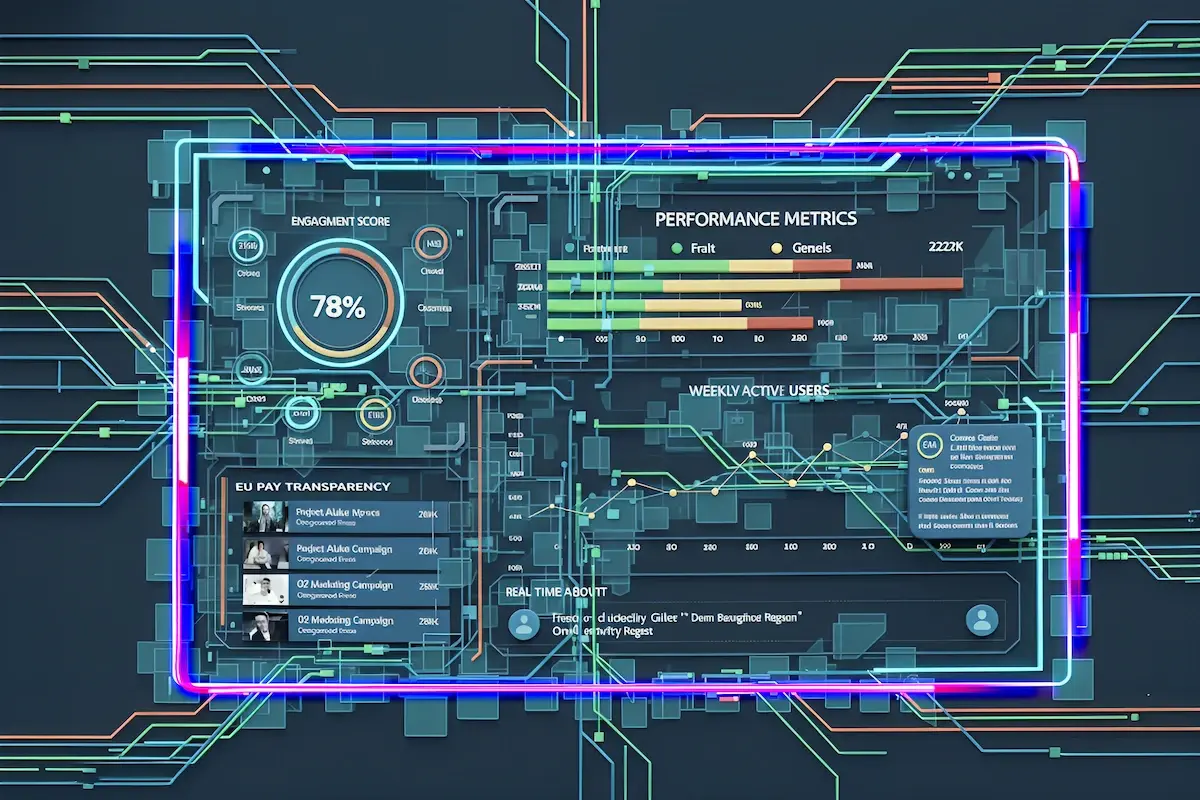
With unified data rather than scattered tools, you can demonstrate compliance through documented performance metrics rather than manual reconciliation. As member states transpose the directive with national variations, software with a flexible architecture adapts quickly. The result: confidence through integration, not anxiety through fragmentation.
Dedicated pay equity tools accurately calculate gender pay gaps. They slice data by role and department, generating polished reports that show where disparities exist. The problem is that these tools identify gaps but can't justify them.
Under Article 10 (Joint pay assessment), a gender pay gap of 5% or more needs justification with objective, gender-neutral criteria, or it triggers a mandatory joint pay assessment with worker representatives. You'll spot a 6% gap in engineering, then scramble for performance data from another system. You'll find inconsistent documentation and can't demonstrate the objective criteria required by Article 4.3 (Equal work and work of equal value).
What if compensation data, performance evaluations, engagement metrics, and objectives lived in one system? This article explains why performance data integration matters for compliance and how Mirro's approach delivers both reporting and defensibility.
The justification requirement no one's talking about
Article 4 (Equal work and work of equal value) establishes the foundation: pay structures must use "objective, gender-neutral criteria." Article 10 (Joint pay assessment) creates enforcement: unjustified gaps of 5% or more trigger joint pay assessments with worker representatives.
Article 4.3 defines acceptable factors: seniority, experience, responsibility, and performance level. Learn more about all directive requirements in our complete guide.
Here's what matters: the directive asks why gaps exist, not just whether they exist. And "why" requires performance data that most companies can't easily access.
Consider this scenario: Your dedicated tool identifies a 6% gap. Regulators ask for justification. You pull performance reviews from a separate system and find inconsistent documentation, subjective evaluations, and no standardized framework connecting performance to compensation. You can't demonstrate objective criteria. The result: mandatory joint assessment, remediation costs, and reputational damage.
Dedicated tools create compliance reports. Integrated platforms create defensible decisions.
Why dedicated solutions fall short
Dedicated pay equity audit tools handle statistical analysis well but lack the performance context needed for justification.
What they show: pay ranges by role, gender distribution, and statistical gaps.
What they miss: performance ratings that justify differentials, OKR achievement data, skills assessments, and 360-degree feedback scores.
Without this data, you can report numbers but can't demonstrate compliance with Article 4's objective criteria requirement.
Dedicated solutions also rely on data exports. Export compensation data on March 15th and performance data on March 22nd—a promotion on March 18th means your data is misaligned before you start. Integrated HRIS pay gap reporting eliminates this problem. The directive needs ongoing monitoring and current justifications, not periodic snapshots.
The Mirro advantage: hire-to-retire employee experience infrastructure for EU compliance
Mirro integrates compensation, performance, engagement, and objectives into a single platform.
Complete justification framework
Run a pay gap analysis in Mirro, and you see performance context automatically. Employee X earns 8% more than Employee Y in the same role. But Employee X has a higher performance rating (4.2 versus 3.7), achieved 95% of OKRs compared to 78%, and demonstrated advanced skills. This is Article 4.3 compliance: objective, gender-neutral factors documented in real time.
Transparency by design
Our goal was to create transparency by design. Mirro integrates HRIS, performance management, engagement tracking, and objectives and quickly adapts to each country's implementation of the directive. As member states transpose the directive with national variations, Mirro's flexible data model allows fast configuration without custom development.
Real-time documentation
Mirro's unified database means changes are reflected immediately. When your manager completes Q1 performance reviews, that data feeds Q2 compensation planning and Q3 gap reporting right away. No exports, imports, or version control problems. This real-time objective pay criteria ensures that, when regulators ask, "Why does this employee earn more?" you have answers at your fingertips.
How Mirro's unified data enables pay gap reporting compliance
Mirro's features connect directly to the EU Directive requirements:
Performance data satisfies Article 4.3(d) "level of performance," through quantifiable ratings and historical tracking.
OKRs provide measurable data on achievement and gender-neutral performance evaluation criteria.
Engagement insights add context that demonstrates holistic contribution.
Salary insights integrate with performance data, so gap analysis segments by quartile.
Let’s take a real-life situation. You discover a 7% overall gap. But segment by performance level in Mirro, and gaps within performance quartiles drop to under 3%. This performance-based pay transparency approach shows pay differences correlate with objective performance factors, not gender—exactly what Article 4.3 requires.
Practical implementation timeline
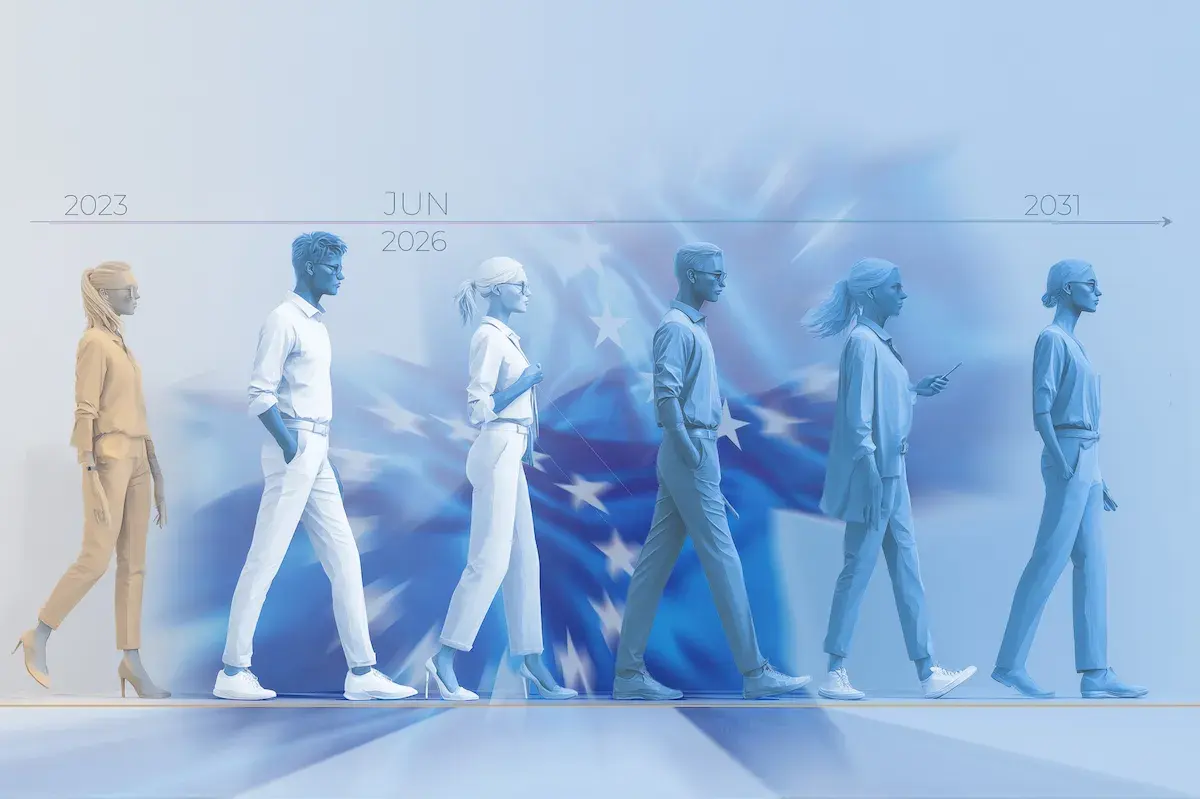
With the June 7, 2026, transposition deadline approaching, organizations need a realistic roadmap. Because Mirro already stores your HR data, you're building on an existing foundation.
For a complete breakdown of all deadlines by company size, see our EU Pay Transparency Directive timeline and compliance checklist.
Before June 2026 (months 1-4)
Month 1-2: Run initial gap analysis, review data completeness, and identify roles needing stronger documentation.
Month 3-4: Refine OKR processes, deploy competency frameworks, train managers on objective documentation, and test performance-segmented reporting.
Post-June 2026 (ongoing)
Month 5+: Quarterly gap monitoring, performance-adjusted analysis, ongoing manager training, regular audit readiness checks.
From compliance anxiety to compliance confidence
Organizations with fragmented systems struggle to demonstrate objective pay criteria when regulators demand justification. Those with integrated platforms like Mirro shift from anxiety to confidence.
The implications go past compliance checkboxes. Proactive performance-adjusted monitoring means you address problems before they trigger Article 10 assessments. Transparent, performance-based compensation attracts talent. Documented justifications reduce legal risk.
Pay transparency regulations keep expanding; the UK has proposed similar legislation, and several US states have enacted disclosure requirements. The integration advantage grows as regulatory complexity increases.
Conclusion
The EU Pay Transparency Directive requires justifying gaps with objective, gender-neutral criteria, not just reporting them. That's impossible without integrated performance data.
Dedicated solutions identify problems. Integrated platforms like Mirro solve them. When compensation, performance, engagement, and objectives are in one system, compliance becomes a natural part of good people management rather than an extra reporting burden.




 Add a button link here