We’re working in a time where decisions feel harder than they used to. There’s more noise, more inputs, more urgency, yet the pressure on strategy execution is greater than ever.
Leading a team in this kind of environment isn’t easy. Leaders are expected to make quick decisions while maintaining alignment and clarity in increasingly complex organizations.
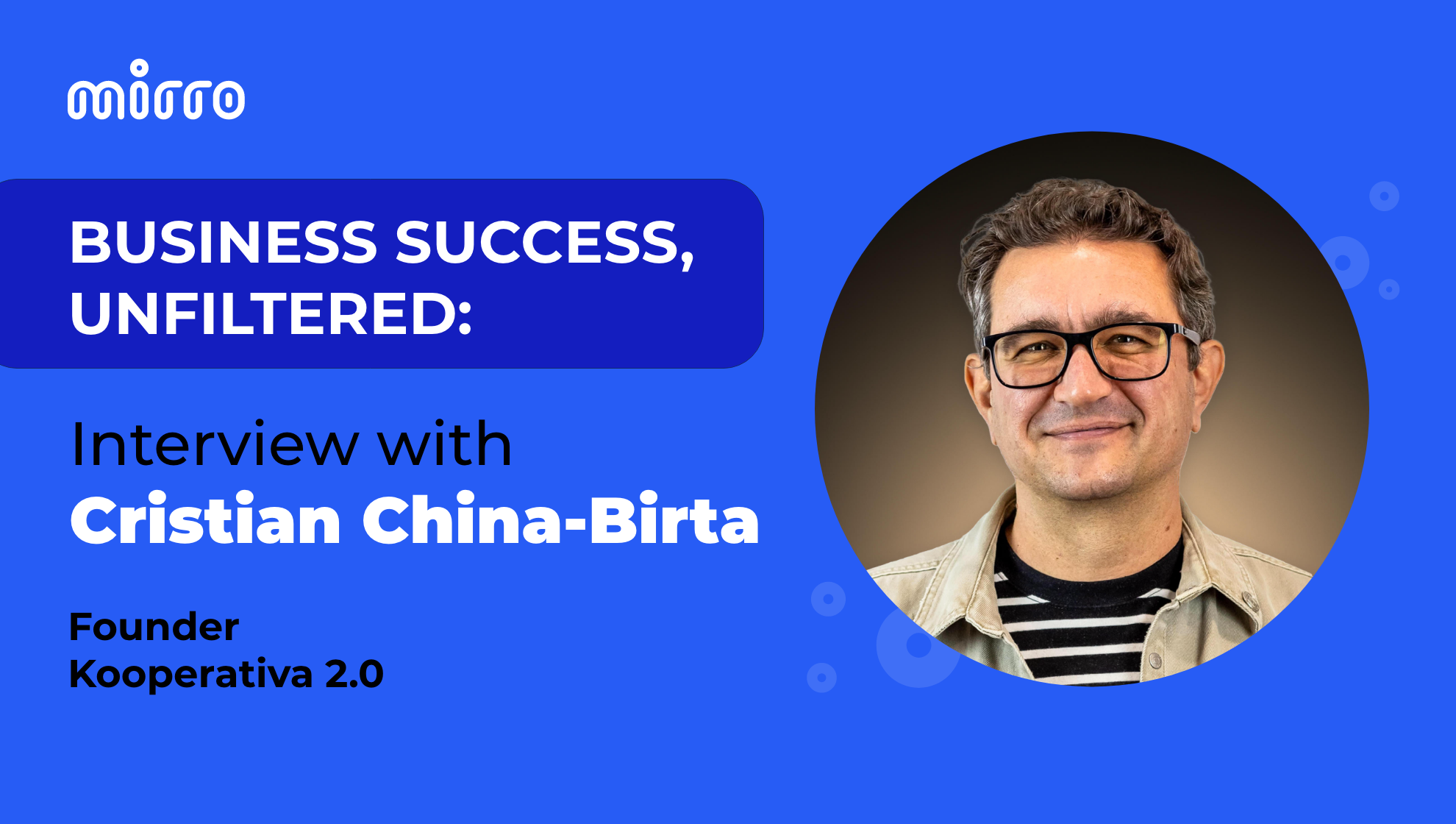
Following these personal observations, I started a conversation with Cristian China-Birta about the role of a leader in an agency, how it has changed as the organization has grown, and where we, as leaders, find clarity when the world is no longer clear.
Cristi is the founder of Kooperativa 2.0, an entrepreneur, consultant, and digital marketing and social media speaker.
Q: Cristi, we’re surrounded by noise, and the pressure to execute is higher than ever. As a founder, where do you feel the most uncertainty right now? And how do you get your clarity back when things get messy?
Cristi: I like to joke: “God, don’t let me live in interesting times.” Well… here we are. The greatest pressure for me is thinking strategically. Clarity in managerial decisions can only come from strategic thinking. Why is there pressure? Because we have so many things to do in an increasingly compressed timeframe. We no longer find the time or the mental resources to think strategically. Hence, the pressure to step out of operations and into the strategic zone. An unsolvable problem for many managers. Unfortunately.
Q: That's true, we're living in a volatile and uncertain period, and the pressure on leaders to create clarity in this unpredictable context is very high. In many agencies, founders are still closely involved in day-to-day work. What changed for you compared to when the team was small?
Cristi: The main difference between a small agency, which has up to 10 people, and one with 70 people and two offices (Bucharest and Chișinău) is that you, as a manager, can't allocate the same attention and interest to all employees and collaborators. This affects organizational culture. That's why a small company functions more "naturally" than a larger one, where rules and procedures are not just "fuss" but ways to make the work more efficient.
Q: From my experience, in small teams, alignment comes almost naturally, because everyone talks to everyone. Do you remember when you realized things needed more structure: objectives, priorities, direction?
Cristi: Around the time we hired our 12th person. That’s when it hit me that things were getting harder to manage. Maybe it was partly in my head, but it felt real. Since then, I've kept testing many tools, but unfortunately, we haven't managed to integrate most of them within the company. On the other hand, the ones we did manage to integrate have become very firmly rooted in our organizational culture and managerial toolkit.
Q: I think that's the key to sustainable business results: a prioritization system that keeps the organization focused on what really matters. Often, the lack of alignment stems from communication problems (unclear priorities, too many directions, frequent strategic changes, etc.). Once you set a strategy, how do you make it meaningful for the team?
Cristi: This is definitely one of the hardest tasks a manager has. Often, as managers, we are so focused on financial matters (and rightly so!) that we forget that people, our colleagues, are the ones on whose shoulders (and brains) the burden will fall so we can reach those financial objectives. Communicating the strategic direction in operational terms, segmented by department and specific role, is very hard. The challenge isn't necessarily the communication itself. We all know plenty of managers who come and say, “Here’s what we’re doing, bye." The hard part is convincing the team that it's the right direction. Conviction in the sense of assimilating the direction, if you will. And of taking ownership that the direction the manager is stating is the right one.
Q: Definitely, but many leaders think that if they communicate clearly, execution will follow. Where does it actually break?
Cristi: Here's an example of clear communication: The sky is very clear today. Is the communication clear? Clear as the cloudless sky, of course. But the natural reaction is: “So what?” A manager often thinks in terms of output. Managers think in terms of output—what they say, what they deliver. But people care about outcomes. Clear communication of strategy is the output. Which, if not thought of in terms of outcome for employees, will remain just clear communication. But one that only triggers "so what?" in employees' minds.
Q: As Kooperativa 2.0 grew, have there been moments when people understood the direction but interpreted it differently? What did you do then to bring the team back to the same direction?
Cristi: Many times. When we, as managers, thought the employees had understood the direction we were going in. And, of course, they understood the direction. They just didn't understand the meaning behind it. This was a big lesson for me: it’s not enough to say where you’re going. You have to explain why. That’s what helps people actually align and take ownership.
Q: Clearly, more than ever, there's a need to understand how individual work contributes to business objectives. When you look at Kooperativa 2.0 today, what signs show you that the organization is moving in the right direction?
Cristi: For us, it’s the time spent in internal discussions. Not meetings—those are something else. I mean real discussions: onboarding, team conversations, cross-team collaboration, and leadership talks. There are a lot of them. And they matter. And whether meetings are more efficient than discussions, well, that is a… discussion we could have another time.
Q: That's true; honest and constant conversations about blockages and adjustments are so important. How do you keep the sense of connection as the team grows?
Cristi: Honestly? It’s hard. As the company grows, you’re dealing with two things at once: more organizational complexity and your own internal adjustment to that complexity. The second one is easy to ignore, and that’s a mistake. Moving from a “small company mindset” to a larger one is not trivial. What helps? Experience, conversations with people who’ve been through it, and a lot of learning: books, research, podcasts.
Q: What are the first signs that a company is losing alignment?
Cristi: In my case, there were no signs. Or at least none that I noticed. It’s like a slow leak. You ignore small issues because you’re buried in operations, and by the time you look up, the damage is already there. If you’re not thinking strategically, you won’t even realize you’ve lost alignment—especially if your priorities were never clearly defined to begin with.
Q: I think every manager has gone through the situation you described at least once. That's exactly why it's important to translate strategy into clear objectives and make progress visible. If you had to introduce one simple mechanism to improve clarity, what would it be?
Cristi: Better internal communication. I know. It sounds like a cliché. Like saying “we want world peace.” But it’s genuinely hard to do well. And it’s definitely not about having more meetings. Many companies confuse the two. They fill calendars with meetings and end up killing real communication. What I mean by communication is actual exchange—honest, useful, human conversations. The kind that usually happen outside formal meetings… if people still have the energy for them.
Final thoughts
One thing Cristi said stuck with me: leadership can feel lonely. There’s pressure, uncertainty, and not a lot of clear answers. But when you see a team moving in the same direction—when things click—that’s where the payoff is.
Clarity doesn’t just appear. You build it. And if every objective connects back to something that actually matters for the business, alignment follows over time.






.jpg)